Restaurant POS Software Cost India 2026: ₹15K-₹3L/mo Guide

Founder & Lead Developer, Codingclave · 200+ projects since 2017
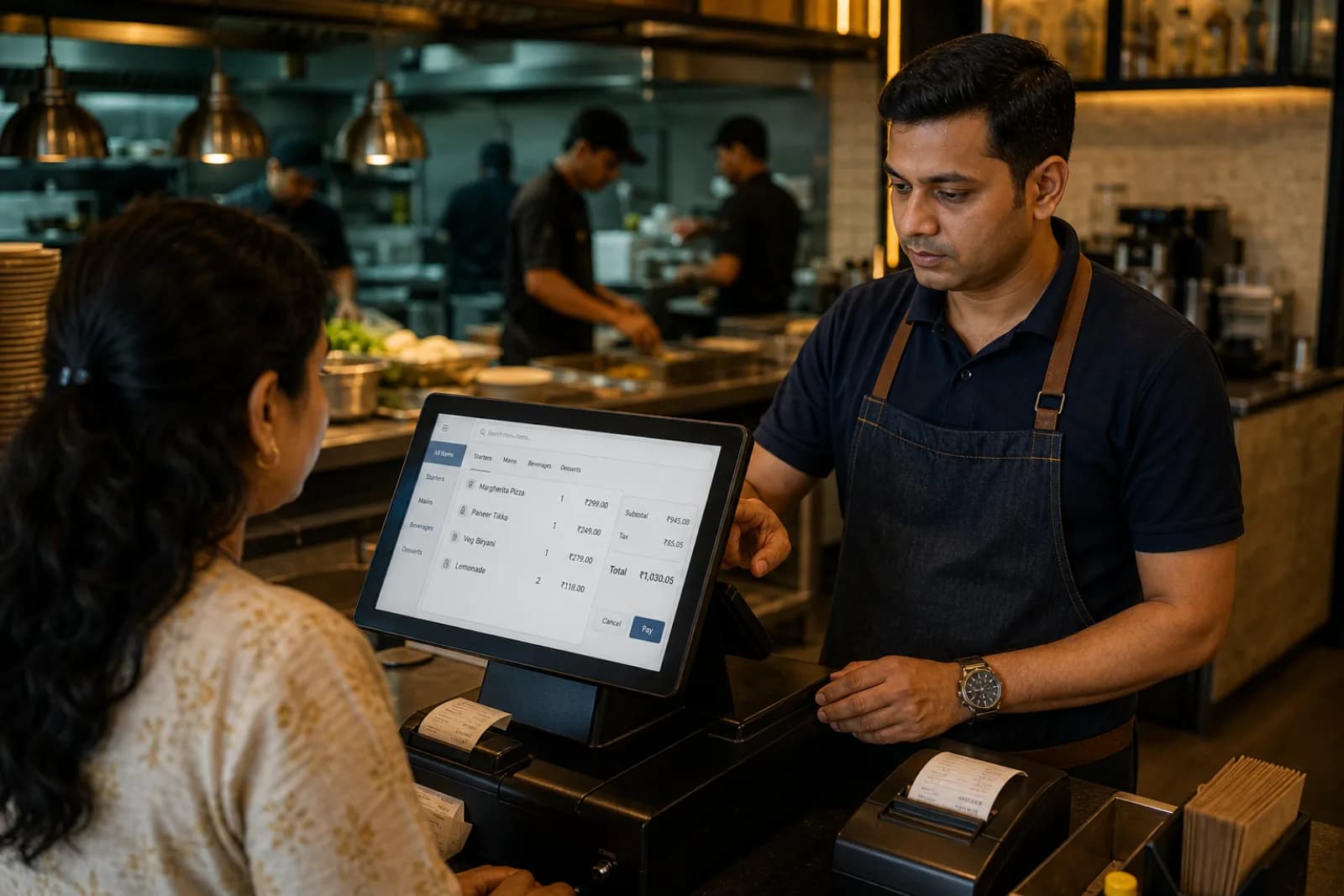
Restaurant POS Software Cost India 2026: The Real Pricing Guide
If your restaurant is evaluating POS software — Petpooja, PosBytz, Posist, or custom build — you're choosing between ₹15K-₹3L/month for the next 5 years. The wrong choice costs ₹20L-₹1Cr in fees + lost revenue from feature gaps.
I'm Ashish Sharma, founder of Codingclave. We've shipped 16+ restaurant POS deployments for Indian restaurants since 2019 — single cafes, multi-outlet QSR chains, cloud kitchens, fine dining brands. This guide is the real cost + decision framework.
TL;DR — Restaurant POS Cost by Restaurant Type
| Restaurant Type | SaaS Monthly Cost | Custom Build Upfront | Recommended Path |
|---|---|---|---|
| Single cafe / 1-outlet QSR | ₹6K-₹25K | ₹2L-₹4L (overkill) | SaaS (Petpooja basic) |
| 2-5 outlet chain | ₹15K-₹85K | ₹4L-₹10L | SaaS (Petpooja Pro / PosBytz) |
| 6-15 outlet chain | ₹50K-₹3L | ₹6L-₹15L | Either, depends on customization |
| 15+ outlet chain | ₹2L-₹8L | ₹10L-₹22L | Custom usually wins |
| Cloud kitchen (multi-brand) | ₹25K-₹1.5L | ₹6L-₹14L | Custom (multi-brand needs) |
| Fine dining / specialty | ₹40K-₹2L | ₹8L-₹20L | Either, custom for unique workflows |
Top Indian Restaurant POS Providers Compared
1. Petpooja — Most Indian Restaurants Use This
- Adoption: 60,000+ Indian restaurant outlets
- Pricing: ₹6K-₹30K/month per outlet
- Strengths: Deep Zomato + Swiggy integration, strong for QSR + casual dining, 24x7 Indian support
- Weaknesses: Customization slow + expensive (₹15-50K per feature request), some workflow rigidity
- Best for: Single to 10-outlet QSR + casual dining chains
2. PosBytz — Cloud-First Modern POS
- Pricing: ₹8K-₹40K/month per outlet
- Strengths: Cloud-native, multi-format support (QSR + cloud kitchen + fine dining in one platform), better mobile UX
- Weaknesses: Smaller market presence than Petpooja, fewer integrations
- Best for: New-age restaurant brands, multi-format chains
3. Posist — Premium for Larger Chains
- Pricing: ₹15K-₹80K/month per outlet
- Strengths: Used by Wow Momo, Biryani Blues, Punjabi By Nature; enterprise-grade features
- Weaknesses: Premium pricing, longer onboarding cycle
- Best for: 10-50 outlet chains with budget for premium
4. Limetray — Marketing-Stack Integrated
- Pricing: ₹12K-₹60K/month per outlet
- Strengths: Marketing automation built-in (ads, loyalty, customer engagement), good for marketing-heavy brands
- Weaknesses: POS features less mature than Petpooja/PosBytz
- Best for: Brands prioritizing marketing automation
5. Custom-Built POS (Codingclave)
- Pricing: ₹6L-₹22L upfront + ₹25K-₹1L/month hosting
- Strengths: Full control, custom workflows, integrate any device, scale economics
- Weaknesses: Upfront investment, longer launch (12-22 weeks)
- Best for: 10+ outlet chains, multi-brand cloud kitchens, fine dining with unique service workflows
Watch what a custom build looks like — Saffron POS reference (5 minutes):
This is one of our reference builds — every feature shown here is what your custom build inherits. 11 modules including PIN-pad login, real-time dashboard, touch POS, KDS, floor plan, order history, reservations, menu management, recipe-level inventory, GSTR-ready reports, and multi-outlet central menu management. See the full feature walkthrough.
Real 5-Year TCO: Petpooja vs Custom for 5-Outlet Chain
Path A: Petpooja Pro
| Year | Cost |
|---|---|
| Year 1 (5 outlets, full Pro tier) | ₹85K/month × 12 = ₹10.2L |
| Year 2-5 | ₹85K/month × 12 × 4 = ₹40.8L |
| 5-Year TCO | ₹51L |
Path B: Custom Build
| Year | Cost |
|---|---|
| Year 1 (build + hosting + features) | ₹10L (build) + ₹35K × 12 = ₹14.2L |
| Year 2-5 (maintenance + features + hosting) | ₹50K/year × 4 + ₹35K × 12 × 4 = ₹19L |
| 5-Year TCO | ₹33.2L |
Custom wins by ₹17.8L for 5-outlet chain over 5 years. Plus you own the system + can add unique features without per-feature fees.
For 12-outlet chain
| Path | 5-Year TCO |
|---|---|
| Petpooja Pro | ₹1.2Cr |
| Posist Premium | ₹1.5Cr |
| Custom Build | ₹50-70L |
Custom wins by ₹50L-₹80L for larger chains.
Critical Features for Indian Restaurant POS in 2026
Aggregator Integration (Mandatory)
- Zomato + Swiggy order sync — orders from aggregators flow into POS as native orders
- Aggregator menu sync — update menu once on POS, syncs to all aggregators
- Aggregator commission reconciliation — auto-calculates commission deductions in reports
- Discount management — Zomato Pro, Swiggy One discounts auto-applied
Without aggregator integration, you're managing 3-4 systems = errors + lost revenue.
Indian Payment Gateway Integration
- Razorpay for cards + UPI + EMI + wallets
- PayU for credit card EMI conversion
- UPI QR codes at every table (₹0 MDR for UPI in India)
- WhatsApp Pay (rolled out to 250M Indian users in late 2025)
GST + Compliance
- GST invoicing with HSN codes per item
- e-Invoicing for restaurants above ₹5Cr revenue (mandatory since 2024)
- GSTR-1 + GSTR-3B reports auto-generated
- TDS deduction on aggregator commissions
WhatsApp Integration
- WhatsApp ordering — customers order via WhatsApp, POS receives, kitchen prints
- Order status updates via WhatsApp
- Loyalty + offers broadcast via WhatsApp
- Customer feedback collection via WhatsApp
Built via WATI or AiSensy. For single-outlet cafes and cloud kitchens sending under 3,000 marketing messages/month, our own BSP PayPerWA charges ₹0 monthly + ₹0.20/msg (plus Meta conversation fees) — useful for testing WhatsApp ordering and broadcast loyalty offers without the ₹999-₹2,500/month subscription lock-in of WATI or AiSensy.
Inventory + Recipe Management
- Recipe-level inventory deduction — selling biryani deducts rice + chicken + spices
- Real-time stock visibility across outlets
- Wastage tracking + alerts
- Vendor management with auto-PO generation
- Multi-store transfers
When Custom Restaurant POS Wins
✅ Build Custom If:
- 10+ outlets in chain (per-outlet SaaS fees become expensive)
- Multi-brand cloud kitchen (one POS for 4-8 brands under one operations)
- Fine dining with unique service workflows (course-based ordering, sommelier integration)
- Specialty restaurants (your specific cuisine type's workflow not standard)
- Want exact-fit features (your loyalty math, your ranking system, your custom reports)
- Plan to expand to 50+ outlets in 3-5 years
- Want full data ownership (customer data, sales patterns, recipe IP)
- Have IT team or vendor relationship for ongoing maintenance
✅ Stick with SaaS If:
- 1-8 outlets, standard QSR/cafe/casual dining workflows
- Want launch in 1-3 weeks
- Don't have IT team
- Standard aggregator + payment + GST features sufficient
- Comfortable with platform branding + workflow constraints
- Budget under ₹6L upfront
What's New in Indian Restaurant POS in 2026
1. AI Voice Ordering for Phone Orders
24x7 AI voice agents handle phone orders — customer calls, AI takes order in Hindi/English, prints KOT directly. Replaces evening + weekend phone staff. Indian-language support via Sarvam + ElevenLabs. Cost ₹5-25 per order vs ₹35-85 for human. See our AI voice agent guide.
2. WhatsApp Ordering Became Major Channel
WhatsApp ordering captures 15-30% of orders for Indian D2C restaurants in 2026. Customer messages → AI bot takes order → WhatsApp Pay checkout → kitchen prints KOT. Massively reduces aggregator commission burden (Zomato/Swiggy take 20-25%).
3. Predictive Inventory via AI
ML models predict daily inventory needs based on day-of-week, weather, festivals, historical patterns. Reduces stockouts 60-80% + reduces waste 25-40%. Built into Petpooja Pro + custom POS systems.
4. Sub-Second Checkout for QSR
QSR demand sub-1-second order entry to handle peak rush. New POS systems use AI-suggested combos + voice order entry to hit this. Reduces queues 30-50% during lunch rush.
5. UPI Autopay for Subscription Meals
Corporate canteens + tiffin services using UPI Autopay for monthly meal subscriptions. Auto-renewal + payment without monthly chasing. Razorpay Subscriptions native support.
6. Cloud Kitchen Multi-Brand Management
Cloud kitchen operations running 4-12 brands from one kitchen need POS that handles brand-aware order routing, brand-specific reports, separate aggregator accounts. Custom POS or PosBytz handles best.
7. Customer Loyalty Becoming Crucial
With aggregator costs eating margins (20-25% commission), restaurants pushing direct ordering via loyalty programs. Custom POS or Limetray have strongest loyalty modules. Average loyalty program ROI: 25-50% increase in repeat visits.
8. Real-Time Demand Heat Map for Multi-Outlet Brands
Multi-outlet chains using real-time demand heat maps to redistribute inventory + staff between outlets dynamically. Custom POS or enterprise SaaS supports this.
Real Indian Restaurant POS Stories
Story 1: 4-Outlet Pune Cafe Chain — Stayed on Petpooja
Cafe chain with 4 outlets in Pune. Considered custom (we quoted ₹8L). Stuck with Petpooja Pro at ₹65K/month for 4 outlets.
5-year cost: ₹39L. Custom would have been ₹28-30L (slight win). But cafe owner valued zero IT burden + faster launch + community support. Stayed on SaaS. Right call for them.
Story 2: 18-Outlet Mumbai QSR Chain — Custom Build Saved ₹85L
Mid-size QSR chain across Mumbai with 18 outlets across 3 brand formats (one parent company). Was on Petpooja Premium at ₹2.4L/month + multiple add-ons = ₹3L/month total.
We built custom POS in 22 weeks for ₹14L:
- Multi-brand POS with brand-aware order routing
- Aggregator integration (Zomato, Swiggy, Magicpin) with custom commission tracking per brand
- Custom loyalty program with brand-cross-redemption
- AI inventory prediction across outlets
- Real-time demand heat map for staff/inventory redistribution
- WhatsApp ordering for direct channel growth
5-year TCO: ₹14L build + ₹9L hosting + ₹6L features = ₹29L vs ₹1.8Cr Petpooja path. Saved ~₹1.5Cr over 5 years. Plus direct WhatsApp orders grew to 22% of total revenue (huge margin gain over aggregator orders).
Story 3: Bengaluru Cloud Kitchen — Multi-Brand Custom POS
Cloud kitchen operator running 6 brands from one kitchen in Bengaluru. Standard SaaS POS treated each brand as separate license = ₹40K/month × 6 = ₹2.4L/month for basic features.
We built custom multi-brand POS in 16 weeks for ₹9L:
- Single kitchen UI showing orders from all 6 brands
- Brand-aware KOT routing (brand color-coded)
- Aggregator integration per brand (each brand has own Zomato/Swiggy accounts)
- Brand-wise reports + accounting splits
- Centralized inventory across brands
Outcome: Replaced ₹2.4L/month SaaS = ₹28L/year saved + better workflow = enabled adding 3 more brands within the year (would have cost ₹18-25K/month each on SaaS). Cloud kitchen revenue grew 60% in year 1 post-launch.
How Codingclave Builds Restaurant POS Software
We've shipped 16+ restaurant POS deployments for Indian restaurants since 2019. Standard delivery:
| Scope | Timeline | Cost |
|---|---|---|
| Single-outlet basic POS | 8-12 weeks | ₹2L-₹4L |
| Multi-outlet chain POS (5-15 outlets) | 14-20 weeks | ₹6L-₹12L |
| Multi-brand cloud kitchen POS | 14-20 weeks | ₹6L-₹14L |
| Enterprise restaurant chain POS (15+ outlets, multi-format) | 22-32 weeks | ₹14L-₹28L |
| Aggregator integration (per platform) | +1-2 weeks | +₹50K-₹1.5L |
| AI voice ordering add-on | +6-10 weeks | +₹3L-₹6L |
| Loyalty program module | +4-6 weeks | +₹1.5L-₹3L |
Every delivery includes: Razorpay + UPI integration, GST-compliant invoicing with e-invoicing for restaurants above ₹5Cr revenue, WhatsApp ordering integration, role-based access (cashier/manager/owner), inventory management, aggregator integration (Zomato + Swiggy default), monitoring + analytics, training for staff.
Get Restaurant POS Built for Your Brand
If your restaurant chain is evaluating POS software, talk to me directly. I'll personally scope your operation + recommend SaaS or custom honestly based on outlet count + workflow needs.
WhatsApp Ashish for free POS audit →
Or schedule a 30-minute call →
About the Author
Ashish Sharma is the founder of Codingclave, a Top Rated Upwork agency that has shipped 16+ restaurant POS deployments for Indian restaurants since 2019 — single cafes, multi-outlet QSR chains, cloud kitchens, fine dining. He works directly with restaurant owners + operations leaders. Reach him on LinkedIn, Upwork, or WhatsApp.
Related reading:
Frequently asked questions
Real pricing depends on outlet count + features. Single QSR/cafe (1 outlet, basic POS + KOT printer): ₹8K-₹25K/year SaaS or ₹2L-₹4L custom. Multi-outlet restaurant chain (5-20 outlets): ₹50K-₹3L/month SaaS or ₹6L-₹15L custom build. Cloud kitchen / dark kitchen: ₹15K-₹65K/month SaaS (heavily aggregator-integrated). Fine dining / specialty restaurant: ₹40K-₹2L/month for premium SaaS or ₹8L-₹20L custom. Most Indian restaurants under 5 outlets win on SaaS (Petpooja, PosBytz, Posist) at ₹15-50K/month total. Above 10 outlets, custom build wins on TCO + control.
Indian-focused choices ranked. Petpooja: most Indian restaurants (60K+ outlets), ₹6-30K/month, deep aggregator integration (Zomato, Swiggy, EazyDiner), strong for QSR + casual dining. PosBytz: ₹8-40K/month, cloud-first, better for new-age restaurants + multi-format. Posist: ₹15-80K/month, premium, best for QSR chains + fine dining (used by Wow Momo, Biryani Blues). Limetray: ₹12-60K/month, marketing-stack-integrated, good for marketing-heavy brands. Toast: US-focused, ₹35-2L/month INR-equivalent, overkill for India. Square POS: not optimized for India (no UPI native, weak GST). Custom POS: ₹6-15L upfront, makes sense for 10+ outlet chains needing custom workflows. We've shipped both SaaS implementations + 3 custom POS systems for Indian restaurant chains.
Core POS features (must-have): (1) Order taking with table-side tablet/handheld; (2) KOT (Kitchen Order Ticket) printing with kitchen routing; (3) Bill splitting + multiple payment modes; (4) Razorpay/PayU integration for cards + UPI; (5) GST-compliant invoicing with HSN codes; (6) Inventory management with recipe-level deduction; (7) Daily/weekly/monthly sales reports; (8) Staff attendance + roles. Aggregator integration: (9) Zomato + Swiggy order sync; (10) Magicpin/EazyDiner discount management; (11) Aggregator commission reconciliation. Customer-facing: (12) WhatsApp ordering ([WATI](/integrations/wati-integration)); (13) Loyalty + rewards; (14) Customer feedback + reviews collection; (15) Online menu QR code (for table ordering). Advanced: (16) Predictive inventory (AI demand forecast); (17) AI voice ordering for phone orders; (18) Cloud kitchen multi-brand management; (19) Sub-second checkout for high-volume QSR.
Real Petpooja pricing breakdown for 5-outlet QSR chain (2026). Base POS license: ₹6,000/month/outlet × 5 = ₹30,000/month. Aggregator integration: ₹2,000-4,000/outlet/month × 5 = ₹10-20K/month. Loyalty add-on: ₹1,500/outlet/month × 5 = ₹7,500/month. Reports + analytics: ₹3,000/outlet/month × 5 = ₹15,000/month. Total: ₹62,500-85,000/month = ₹7.5-10L/year. 5-year TCO: ₹37-50L. For comparison, custom POS for same 5-outlet chain: ₹10L upfront + ₹35K/month hosting + ₹2L/year features = ₹10L + ₹21L + ₹10L = ₹41L over 5 years. Custom roughly equal at 5 outlets, wins clearly above 8-10 outlets.
Always integrate via POS, never use Zomato/Swiggy tablet alone. Reasons: (1) Two systems = duplicate data entry = errors + slower kitchen; (2) Zomato/Swiggy tablets don't sync with your inventory (stockouts on aggregator while showing 'available'); (3) No unified reports (your accountant juggles 3-4 systems); (4) Loyalty programs don't apply to aggregator orders if disconnected. POS-integrated path: order from Zomato hits POS → kitchen printer → inventory deducted → reports unified. Setup time: 1-2 days through POS provider's existing integration. Cost: typically ₹2-5K/outlet/month additional for integration. ROI: most restaurants we've integrated see 5-10% revenue lift from better inventory accuracy + 30-50% time savings on reconciliation.
Six key differences. Cost: custom ₹6-15L upfront vs SaaS ₹50K-₹3L/month. Customization: custom = unlimited; SaaS = ₹15K-₹50K per custom feature, slower delivery. Integrations: custom = anything (your specific aggregator, custom loyalty program, proprietary kitchen display); SaaS = limited to platform's marketplace. Speed: SaaS launches in 1-2 weeks; custom takes 12-22 weeks. Maintenance burden: SaaS = zero; custom = need IT person or vendor relationship. Data ownership: custom = full ownership; SaaS = platform owns. Reports: custom = exactly what management asks for; SaaS = predefined reports + paid add-ons. For 1-5 outlets, SaaS wins on speed + simplicity. For 10+ outlets with unique workflows (e.g., kitchen routing rules, custom loyalty, vertical brand portfolio), custom wins on TCO + capability.
Realistic timelines based on scope. Single-outlet basic POS: 8-12 weeks (₹3-6L). Multi-outlet POS with aggregator integration: 14-20 weeks (₹6-12L). Multi-format chain POS (fine dining + cloud kitchen + QSR brands under one company): 18-26 weeks (₹10-22L). Most chains we work with phase: Phase 1 single-outlet + KOT + billing (8-10 weeks); Phase 2 multi-outlet + aggregator (8-12 weeks more); Phase 3 advanced features (loyalty + AI inventory + cloud kitchen support, 8-12 weeks more). Phased approach lets revenue grow with capability.
Real ROI from 16+ deployments. Operational gains: (1) Order time drops from 4-7 min to 1-2 min per table (more table turns); (2) Bill calculation drops from 3-5 min to 30 seconds (faster customer turnover); (3) Inventory accuracy jumps from 60% to 95% (reduces theft + waste = saves 3-8% of food cost); (4) Aggregator reconciliation auto vs manual (saves 10-15 hrs/week per outlet). Revenue gains: (5) Loyalty programs increase customer return rate 25-40% (₹5-25L/year per outlet for casual dining); (6) WhatsApp ordering captures 10-25% additional orders previously lost to call delays; (7) Predictive inventory reduces stockouts 60-80%. Most Indian restaurants see ROI break-even in 4-9 months on ₹40K-₹2L/month POS investment.