Fintech & Finance Software Development Company in Mumbai
Mumbai is India's financial capital — home to RBI, NSE, BSE, and headquarters of every major bank and NBFC. BKC and Lower Parel are fintech startup hotspots driving massive demand for lending and payment software. Codingclave builds custom fintech & finance software solutions for businesses in Mumbai, Maharashtra — from management systems and mobile apps to automation tools that solve real operational challenges.
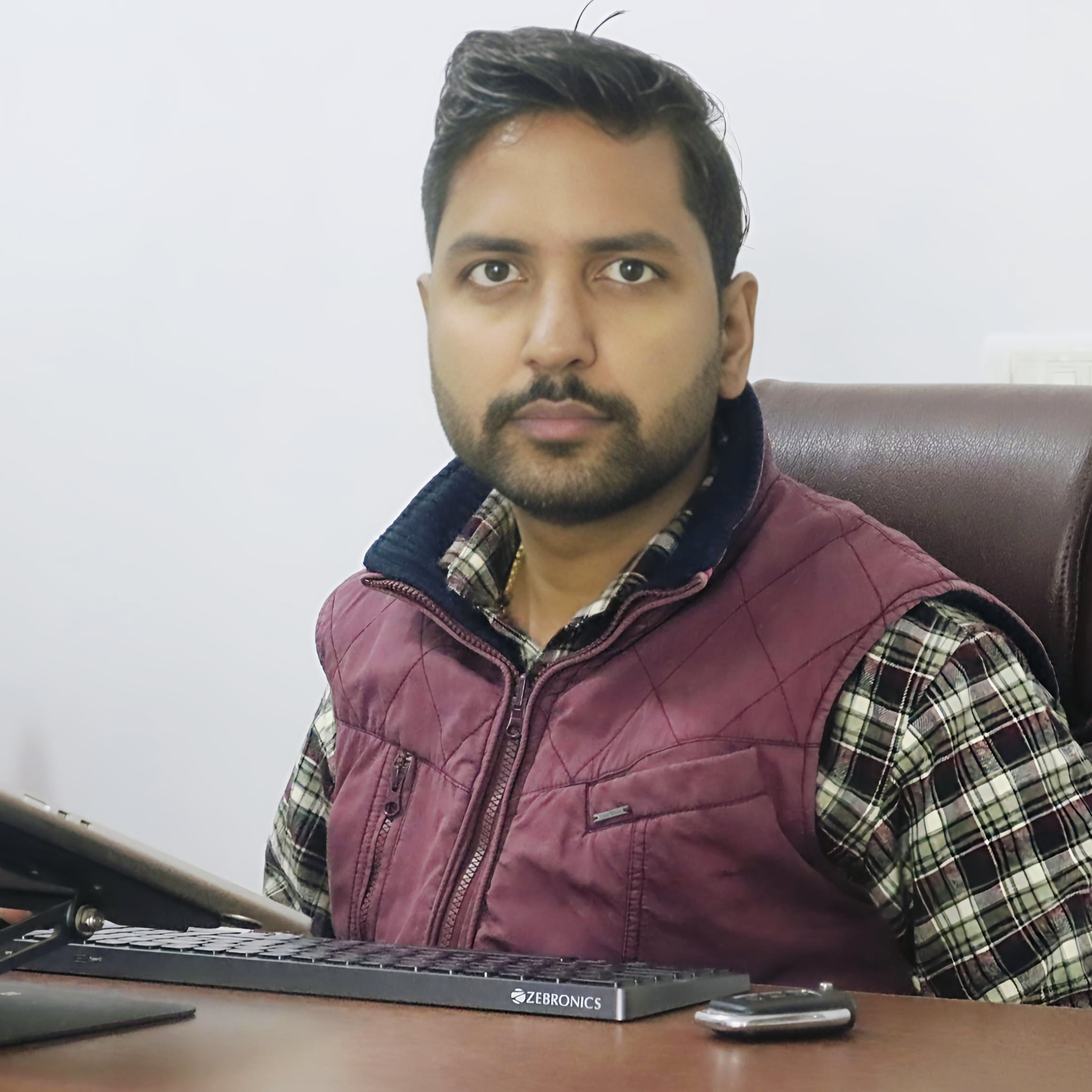
Talk directly to Ashish
Founder & Lead Developer · Replies in 2 hours
Problems We Solve for Mumbai Finance & Fintech
Manual loan processing and document verification is slow and error-prone
Compliance with RBI, SEBI, and GDPR regulations requires careful system design
Lack of real-time reporting makes financial decision-making reactive instead of proactive
Security vulnerabilities in payment systems can lead to fraud and regulatory penalties
How We Help Mumbai Businesses
Loan management systems with application processing, credit scoring, and disbursement
Payment gateway integration and digital wallet solutions
KYC/eKYC automation with Aadhaar, PAN, and bank statement verification
Financial dashboards with real-time reporting, reconciliation, and audit trails
Expense management and accounting software with GST compliance
Finance & Fintech Software Products for Mumbai
Ready-made software products designed for finance & fintech businesses in Mumbai.
Our Clients
From startups to government institutions — trusted by 200+ businesses worldwide





Selling fintech software in Mumbai: notes from the ground
Checked
Codingclave has built lending, payments and back-office software from Lucknow since 2017, and Mumbai is a regular source of enquiries. The page above covers what we build. This is what I tell Mumbai buyers before the first call.
Who actually buys fintech software here
BKC and Lower Parel startups are the loud end of the market. They are not most of my Mumbai enquiries.
Three groups come up again and again. First, small lenders and loan service providers running an app on top of a partner NBFC's licence. Second, co-operative credit: Maharashtra has 434 urban co-operative banks, a third of India's 1,330, and six of the seven UCB mergers in 2024-25 happened in this state, which means a lot of boards looking at their core software for the first time in years. Third, the Fort and Dalal Street broker and adviser offices, plus the jewellers around Zaveri Bazaar in Bhuleshwar, a market estimated to handle about 65 percent of India's gold trade, who want gold-loan, scheme and bullion-rate software rather than a "fintech platform".
The rules that shape the build
The RBI's Key Facts Statement rules have applied to every new retail and MSME term loan since 1 October 2024. The KFS must be written in a language the borrower understands, show an APR that includes charges collected for third parties such as insurance and legal fees, and stay valid for at least three working days. In Mumbai that means Marathi and Hindi templates, not an English PDF with a tick box.
The Digital Lending Directions of 8 May 2025 go further: the lender's name, amount, tenor, APR and a KFS link must appear before the borrower taps accept, and a multi-lender app must list every matching offer and name the lenders that did not match.
Two Maharashtra-specific points catch people out:
| Rule | What it means for your software |
|---|---|
| Maharashtra Money-Lending (Regulation) Act, 2014 | If you lend from your own book and you are not a bank, the state expects a money-lender's licence for the area. Lending without one carries up to five years in prison, a Rs 50,000 fine, or both. Whether an RBI-registered NBFC sits outside the Act is a question for your lawyer, and I raise it on the first call. |
| Maharashtra Stamp Act, Schedule I, Article 6 | Hypothecation and pledge agreements are stamped as a percentage of the amount secured, with a ceiling the 2021 amendment raised from Rs 10 lakh to Rs 20 lakh from early 2022 (Rs 50 lakh for a bank consortium), paid through the GRAS e-challan portal. I add a stamp-record field and a reminder to the loan file so collections do not fail on an unstamped agreement. |
Payments and money, the Mumbai version
NPCI's state-wise numbers put Maharashtra first for UPI: 6.58 billion transactions between April and June 2025, and 9.47 percent of the national total in June. So collections design here starts with UPI mandates, then NACH, then everything else. Cheque pickup is a fallback for co-operative members, not the default.
On funding: Tracxn counted $889 million raised by Indian fintechs in the first half of 2025, with Mumbai taking 14 percent against Bengaluru's 55 percent. In practice, most Mumbai buyers I speak to are revenue-funded. They want a fixed-scope quote and a phased plan rather than a retainer that assumes a Series A.
Remote from Lucknow, and when to hire locally
We work in the same time zone, on WhatsApp, with daily builds you can open in a browser. I travel to Mumbai for kickoff, board demos and go-live when the project warrants it. For a co-operative society or a regional lender that is enough, and it keeps Mumbai office overheads out of the price.
Choose a Mumbai vendor instead when you need someone physically on call for RBI or SEBI inspections, when a UCB board insists on a supplier within an hour's drive, or when the project leans on a Mumbai call centre's telephony stack and the integration work is mostly on their premises.
Questions we get from Selling fintech software in Mumbai: notes from the ground buyers
- We are a credit co-operative society in Mumbai, not an NBFC. Can you still build our loan and deposit software?
- Yes. Maharashtra has 434 urban co-operative banks, a third of the country's 1,330, and far more credit societies beneath them, so this is a request I expect from Mumbai and Thane. I build member ledgers, recurring and fixed deposits, loan EMIs, share capital and dividend registers, with Marathi labels on member-facing screens and printed statements. Your auditor's formats drive the reports, so I ask for last year's audit file before quoting. Boards usually want a demo in the room rather than on a call; I come to Mumbai for that and for go-live, and day-to-day support runs on WhatsApp afterwards.
- Our lending app in Mumbai runs as an LSP for a partner NBFC. What does the software have to do under the 2025 RBI rules?
- The Digital Lending Directions of May 2025 put most of the work on your screens. Every offer must show the lender's name, amount, tenor, APR, monthly repayment and a link to that lender's Key Facts Statement before the borrower accepts, not at disbursal. If you work with more than one lender, every matching offer must appear, and the names of lenders who did not match must be shown too. The KFS itself must be in a language the borrower understands, so for Mumbai I build Marathi, Hindi and English versions and store which one was shown. Repayments must land directly in the lender's account with no pass-through or pool account, so I keep your wallet out of that path.
- Can we claim anything from the Maharashtra government for building our fintech platform?
- Possibly, but check first. The Maharashtra Fintech Policy of February 2018 set up a Rs 250 crore corpus and reimbursements for startups with a registered office in the state and turnover up to Rs 25 crore: up to Rs 3 lakh a year for cloud hosting, up to Rs 4 lakh of state GST, inside a Rs 10 lakh annual cap for three years. Applications went through the Fintech PMU under MahaIT and the Mumbai Fintech Hub. I have not seen a formal replacement policy, so ask the Hub whether the window is still open before you count on it. If it is, I keep hosting and development invoices separate so the claim is clean.
Sources: Indian Cooperative, 1,330 UCBs in India; Maharashtra, Karnataka lead (Lok Sabha reply citing the National Cooperative Database), March 2026; Business Standard, Number of UCBs declines to 1,457 in FY25 as RBI consolidation continues, June 2025; Reserve Bank of India, Key Facts Statement (KFS) for Loans and Advances, circular RBI/2024-25/18, 15 April 2024; Reserve Bank of India (Digital Lending) Directions, 2025, circular RBI/2025-26/36, 8 May 2025; Medianama, Maharashtra tops UPI charts (NPCI state-wise data), July 2025; Tracxn, India FinTech Semi Annual Funding Report H1 2025, as reported by ET BFSI and Fortune India, July 2025; Maharashtra Money-Lending (Regulation) Act, 2014, Section 39, via Indian Kanoon; Khaitan & Co, Amendments to Maharashtra Stamp Act: increase in the ceiling on stamp duty for security documents, 2022; IGR Maharashtra (GRAS e-challan); Government of Maharashtra, Fintech Policy 2018 (MIDC copy of the policy); Mumbai Fintech Hub, fintech.maharashtra.gov.in; Wikipedia, Zaveri Bazaar
Common Questions About Finance & Fintech Software in Mumbai
A basic accounting or invoicing tool for Mumbai businesses starts around INR 2.5 lakh ($3,000). A full loan management system or payment platform ranges from INR 6 lakh to INR 20 lakh depending on compliance requirements and feature complexity.
Yes. We build end-to-end loan management systems for NBFCs and lending startups in Mumbai — covering application intake, document collection, credit scoring, approval workflows, disbursement, EMI tracking, and collections with RBI compliance.
Absolutely. We integrate with Razorpay, PhonePe, UPI, NEFT/RTGS, and open banking APIs for fintech companies in Mumbai. We build secure payment processing with PCI-DSS compliance considerations and end-to-end encryption.
We implement bank-grade security for all fintech applications — end-to-end encryption (AES-256, TLS 1.3), two-factor authentication, role-based access control, audit logging, IP whitelisting, and regular penetration testing. All systems meet RBI and SEBI compliance standards.
A basic financial tool MVP takes 6-8 weeks. A comprehensive lending or payment platform with compliance features, integrations, and mobile apps takes 12-20 weeks. We follow agile sprints with compliance checkpoints built into the process.
Related Industries & Cities
Other Industries in Mumbai
Ready to Build Something Great?
Talk to Ashish Sharma — free consultation, honest pricing, and industry expertise for Mumbai businesses.
Reply Within 2 Hours
We respond fast. No waiting days for a callback or email. Get answers quickly.
100% Free Consultation
Tell us your idea. We'll give you an honest estimate, tech recommendations, and a roadmap — free.
200+ Projects Shipped
From government websites to SaaS products — we've delivered at every scale since 2017.
Upwork JSS
Projects